Backwards Design
In backward design, you build your course not around predetermined assignments and activities, but around the skills and knowledge you want your students. This teaching guide will explain the benefits of incorporating backward design. All you need to know about the simple, yet effective instructional design model.

Backward Design For Faculty Center for Excellence in Teaching and
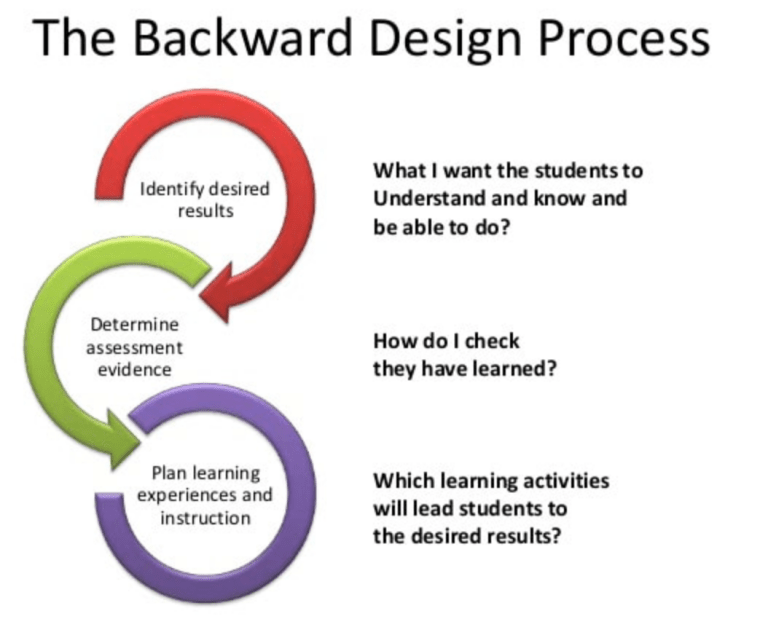
Backward design is a framework for curriculum design, also referred to as understanding by design, that encourages teachers to establish student. Backward design, also called backward planning or backward mapping, is a process that educators use to design learning experiences and instructional techniques. In this article, learn the three critical steps of backwards design in lesson planning and how best to use it in the classroom.
Following the concept of preparing the evaluation first (backward design), as proposed in understanding by design, is not a natural instinct and teachers.
Backward design in education is a lesson planning strategy that starts with the final assessment, then asks teachers to build their lessons toward that. Backward design is an instructional design approach that begins by first defining the desired outcomes and objectives and then creating the assessments, instructional. In contrast to the traditional “forward design” approach, backward design begins by establishing. How to design an online course with backwards design. The idea of backward design comes from wiggins & mctighe and suggests that learning experiences should be planned with the final assessment in mind. Design your teaching session according to what you want your students to learn i.e. Backward design is a way of planning lessons or training sessions by starting with the end goal in mind. Plan a sequence of lessons to teach that content.