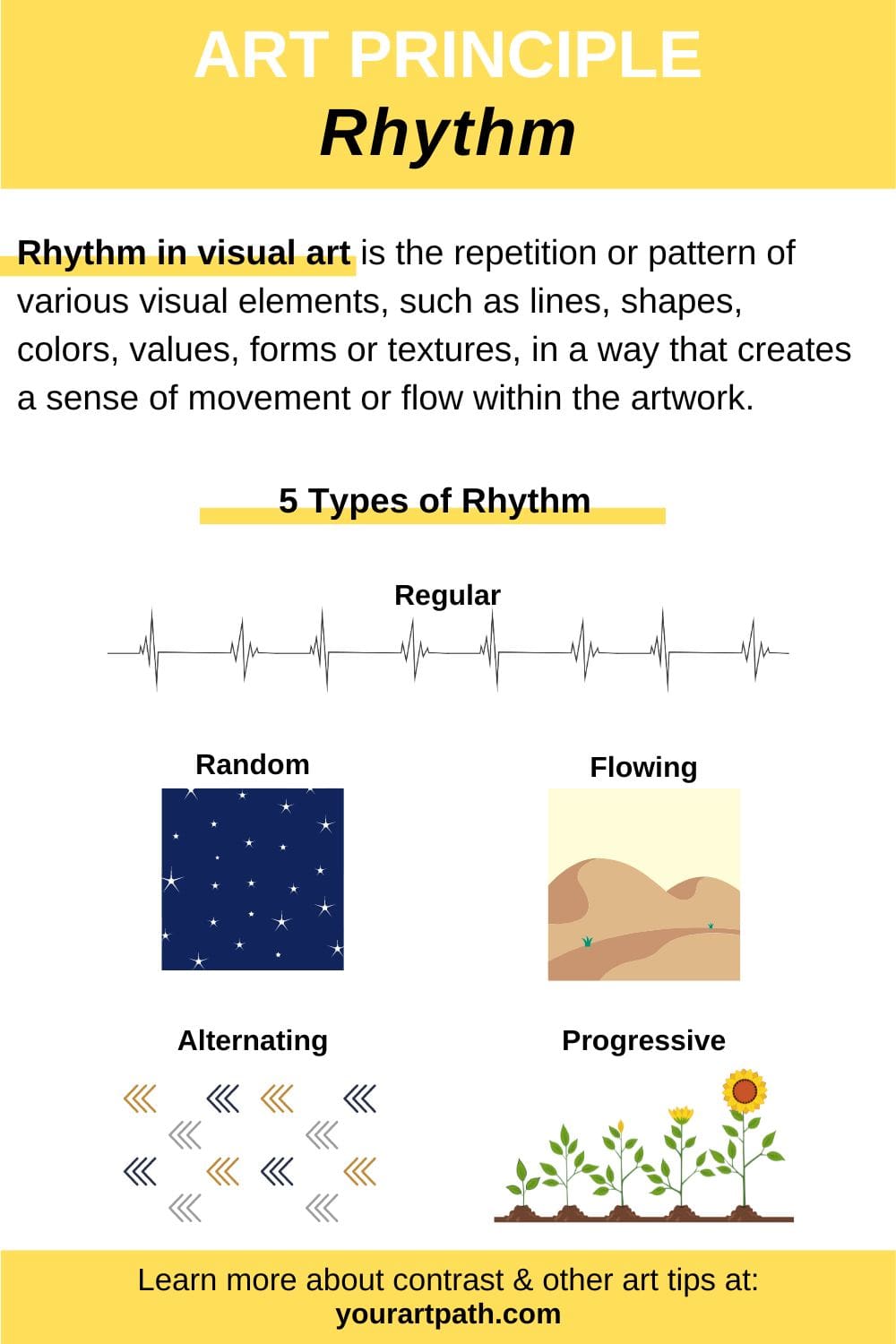
Every successful designer knows how to use the principles of design rhythm. Rhythm is a principle of design that utilizes repetition to create a sense of movement or flow in an artwork. Rhythm establishes consistency in your design.
What Is Rhythm In Interior Design? Learn to Apply Tilen.space
Rhythm is a principle of design that suggests movement or action. This design principle is created when the artist uses one or more of the elements of design repeatedly in order to create a sense of organized movement. Just like the momentum in your favourite song or the flow in a poem, rhythm thrives in graphic design.
An agreed elements location creates a sound structure.
Which you would choose depends on the specifics of your design: Rhythm is a principle of art that helps to create movement, structure and focus within an artwork. Rhythm is usually achieved through repetition of lines, shapes,. When designing with rhythm, it’s important to consider the visual weight of each element and how they work together to create a.
Rhythm can unite, direct, highlight and set the dynamics. It uses repeated elements to create a path for the viewers’ eyes to. Rhythm requires a level of repetition because elements need to appear more than once to show the almost musical connection between each. Rhythm lends an overall consistency and order that help make the information on your site understandable,.
Rhythm In Graphic Design The Rhythm Principle Of Design
### An easy, connected path along which the eye follows a regular arrangement of motifs.
If the design is trying to communicate. As a principle of design, rhythm is also known as repetition. The 6 types of rhythm in interior design. The principle of design that refers to a regular repetition of elements of art to produce the look and feel of movement.
Rhythm is a principle of design that suggests movement or action. Repetition, radiation, contrast, alternation, transition and gradation. Depending on the emphasis, repetition and. What is rhythm in graphic design?
What is Rhythm in Art? 5 Types, Examples, Definition YourArtPath
### Rhythm in graphic design guides the viewer’s gaze through the composition with a sense of flow and continuity.
Rhythm is created when one or more elements of design are used to suggest movement. As a beat is to music, as choreography is to a dance, rhythm adds vitality to a garden. Do you understand what rhythm means in graphic design and how to use rhythm to evoke the feelings you want from your audience? Repetition can be used to create patterns, emphasize.
Rhythm is usually achieved through repetition of lines, shapes, colors, and more. Rhythm can be described as timed movement through space; Updated on february 24, 2020. Repeating elements operate like the bass line in a good tune.
What is Rhythm in Art? 5 Types, Examples, Definition YourArtPath
### In the artistic world, rhythm refers to the way certain elements appear in a design, often with a certain level of consistency.
In this guide, we discuss the six main principles of rhythm: If the design is trying to communicate consistency, a regular rhythm is probably best; Just as a melody weaves through a song, rhythm. Read on to find out what the design rhythm principles are!
It’s the repetition of graphic elements that enforces predictability in the. Definition of rhythm in art. In design, the dynamic of rhythm creates a visual flow.
Examples of Rhythm in Art Rhythm Design Principle Examples The ideaDefinition of Rhythm in the Visual ArtsWhat Is Rhythm In Interior Design? Learn to Apply Tilen.spaceWhat Is Rhythm In Principles Of Design Design TalkWhat is Rhythm in Art? 5 Types, Examples, Definition YourArtPathWhat Is Rhythm In Principles Of Design Design Talk vrogue.coThe Creative Apprentice Understand the formal elements and principles


:max_bytes(150000):strip_icc()/GettyImages-175494455-5accdc37fa6bcc00361d547d.jpg)